Painting | Assigned Object Project

These are some in progress examples of our "assigned object project". Each student was given a group of 5 objects; they could choose 1 to eliminate but needed to design on scene that incorporated the other 4 objects or references to them. Some of the objects included images of animals, life jackets, musical instruments, buttons, paper clips, and flowers. The life jacket could represent water, the button could be shown as a circle, clothing, or reflected in someones eyes. 


Drawing A | Shoe Drawings (Non-Traditional Self-Portraits)

Below are some finished examples of the shoe drawings created by students in Drawing A. Each of these non-traditional self portraits have at least 5 things that show the students hobbies, interests, and favorite things.


Animals in Art | Cartoon Character Design

As part of our comic strip project, students were asked to design a cartoon character based on an image of an animal. We brainstormed a list of possible adjectives as a class and each student was asked to surround their drawing with 10 words to describe their character. These words were all supposed to be things that would transfer into their story or appear within their finished comic strips. 


Drawing A | Shoe Drawings (Non-Traditional Self-Portraits)

After our "pre drawing" of watches, students in Drawing A started to work on different techniques for mapping in objects and shading them. Their first real project is a shoe drawing which is essentially a non-traditional self portrait. Along with a shoe of the students choice, they selected at least 5 objects that represent their lives, hobbies, interests, or favorite things. Below are some examples of this project as a work in progress. 


Animals in Art | Finished Zentangles

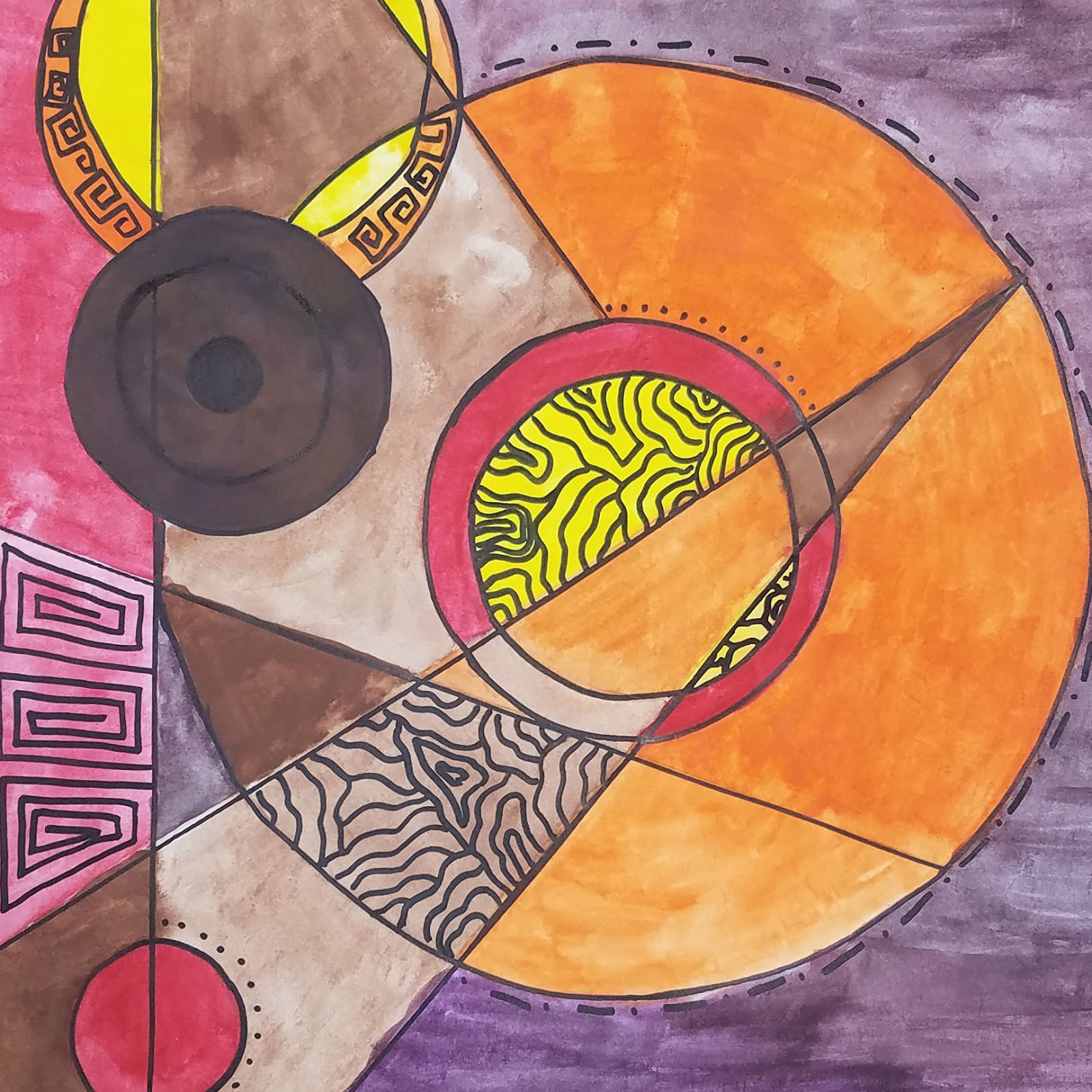
Painting | Abstract Geometric Paintings

Students taking Painting typically spend the whole 1st quarter focusing on using watercolor paints. Our first project is very basic, but gets them used to using the paints, layering colors (both the same and different), as well as mixing various colors to create different shades. Each student selected one pair of complementary colors for this project. We used a series of lines and circles to create a balanced composition. We also added accent designs throughout the painting once it was dry.